

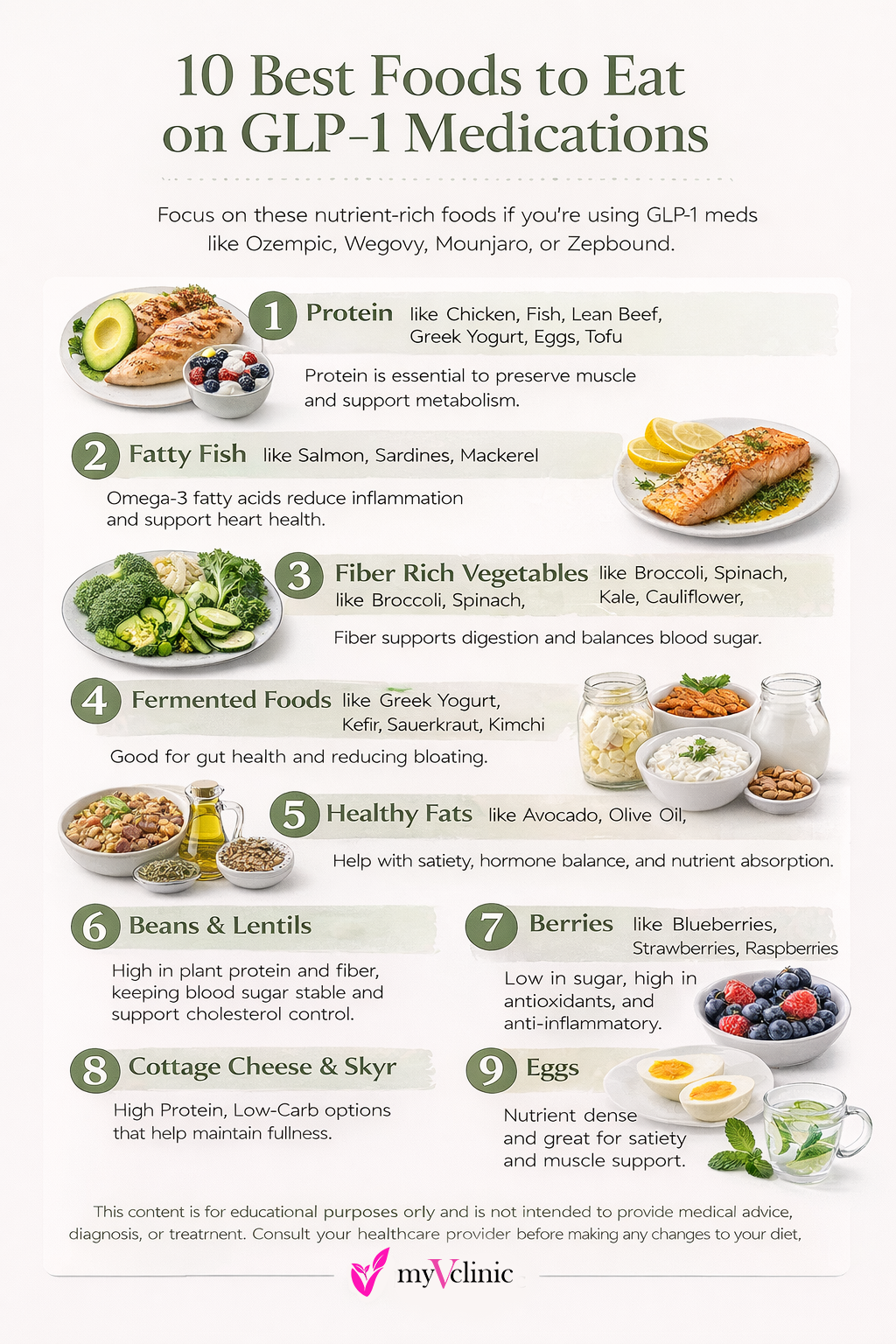
10 Best Foods to Eat on GLP 1 Medications
Foods to Eat on GLP 1 Medications
GLP 1 medications have reshaped how clinicians approach weight management, insulin resistance, and metabolic health. Medications such as semaglutide and tirzepatide reduce appetite, slow digestion, and improve blood sugar regulation. But medication alone does not determine outcomes.
If this is your first time hearing this, what you eat while taking GLP 1 medications matters more than ever.
Because these medications significantly reduce hunger, many patients unintentionally eat too little protein, fiber, and overall nourishment. Over time, this can contribute to muscle loss, fatigue, constipation, nausea, and stalled progress. At My V Clinic, we view GLP 1 therapy as a supportive medical tool, not a substitute for nutrition.
This guide explains the ten most important food categories to prioritize while using GLP 1 medications and why these choices matter for muscle preservation, digestive health, and long term metabolic stability.
How GLP 1 Medications Change Digestion and Appetite
GLP 1 receptor agonists mimic a naturally occurring hormone that slows gastric emptying and increases feelings of fullness. Newer dual agonists also activate GIP, improving how the body processes both glucose and fat.
These effects are beneficial, but they also mean patients eat less overall volume. When nutrition quality drops along with calorie intake, the body may lose lean muscle instead of fat, which can negatively affect metabolism and physical function.
Nutrition while on GLP 1 therapy should focus on three priorities:
• Preserving lean muscle
• Supporting digestion and gut health
• Maintaining metabolic resilience
The foods below align with these goals.
1. Protein Rich Foods
Protein is the most critical nutrient while on GLP 1 medications.
Reduced appetite increases the risk of under consuming protein, which can lead to muscle loss and metabolic slowdown. Adequate protein intake supports lean mass, strength, and satiety.
Good options include chicken, fish, lean beef, eggs, Greek yogurt, cottage cheese, tofu, and tempeh.
Clinical guidance often targets approximately one gram of protein per pound of goal body weight per day, distributed evenly across meals rather than concentrated in one sitting.
2. Fatty Fish
Fatty fish such as salmon, sardines, and mackerel provide omega three fatty acids that support cardiovascular health and help reduce inflammation.
Omega three intake has also been associated with improved insulin sensitivity, which is relevant for many patients using GLP 1 medications.
Aim for two to three servings per week. For patients who dislike fish, algae based omega three supplements may be considered with provider guidance.
3. Fiber Rich Vegetables
GLP 1 medications slow digestion, which can increase the risk of constipation and bloating. Fiber rich vegetables help maintain bowel regularity and stabilize blood sugar.
Examples include broccoli, spinach, kale, cauliflower, zucchini, and Brussels sprouts.
Vegetables also support the gut microbiome, which plays a role in metabolic health and hormonal signaling.
4. Fermented Foods
Fermented foods help maintain healthy gut bacteria, which may be disrupted by reduced food intake and slower digestion.
Options include plain Greek yogurt, kefir, sauerkraut, kimchi, and miso.
Small portions are sufficient. Excess intake can worsen bloating for some individuals.
5. Healthy Fats
Healthy fats support hormone production, nutrient absorption, and satiety.
Examples include olive oil, avocados, nuts, and seeds.
Eliminating fat entirely is not supportive of long term health. Portion control matters, but fat free diets often increase fatigue and hunger later in the day.
6. Beans and Lentils
Beans and lentils provide plant based protein and fiber with a low glycemic impact.
They help stabilize blood sugar, support cholesterol levels, and contribute to fullness without large glucose spikes.
They are practical, affordable foods that work well in soups, stews, and salads.
7. Berries
Berries such as blueberries, strawberries, and raspberries are lower in sugar than many fruits and rich in antioxidants.
They support inflammation control and long term weight maintenance while satisfying sweet cravings.
Pairing berries with protein helps minimize blood sugar fluctuations.
8. Cottage Cheese and Skyr
Cottage cheese and skyr are high protein dairy options that digest slowly and promote satiety.
They are especially useful for patients who struggle to meet protein needs due to early fullness.
Choose plain, low sodium varieties when possible.
9. Eggs
Eggs are nutrient dense and provide high quality protein, B vitamins, and choline, which supports brain and liver health.
They improve satiety and may reduce calorie intake later in the day.
Eggs are versatile and easy to prepare, making them a reliable option during appetite suppression.
10. Hydrating Foods and Fluids
GLP 1 medications may increase nausea and dehydration, particularly during dose escalation.
Adequate hydration supports digestion, bowel regularity, and medication tolerance.
Helpful options include water, broths, soups, cucumbers, and herbal teas such as ginger or peppermint.
Common Nutrition Myths on GLP 1 Therapy
A common myth is that food quality no longer matters once appetite is suppressed. In reality, nutrition becomes more important, not less.
Another misconception is that carbohydrates must be eliminated. Fiber rich carbohydrates support gut health and metabolic stability.
Protein does not cause bulk. It preserves lean muscle.
Fat free diets are not healthier and may impair hormone balance and energy.
When GLP 1 Medications Require Caution
GLP 1 medications may not be appropriate for individuals with:
• Personal or family history of medullary thyroid cancer
• MEN2 syndrome
• Severe gastroparesis
• History of pancreatitis or gallbladder disease
• Pregnancy or plans to become pregnant
Medical supervision is essential.
FAQs
Do I need to count calories on GLP 1 medications
Protein and nutrient intake are more important than strict calorie tracking.
Can I eat less protein because I am less hungry
No. Protein needs often increase during weight loss to protect muscle.
Are carbohydrates allowed on GLP 1 therapy
Yes. Focus on fiber rich, minimally processed sources.
Why am I constipated on GLP 1 medications
Slowed digestion, low fiber intake, and dehydration are common contributors.
Can I exercise while using GLP 1 medications
Yes. Resistance training is strongly encouraged to preserve muscle.
Do I need supplements
Some patients may benefit based on lab results and intake.
Is nausea related to food choices
Yes. Large, fatty, or highly processed meals often worsen symptoms.
Can I drink alcohol on GLP 1 therapy
Alcohol tolerance may be reduced and nausea may worsen.
How long should I stay on GLP 1 medications
Duration varies and should be individualized with a provider.
Are GLP 1 medications a permanent solution
They are tools that work best alongside sustainable nutrition and lifestyle changes.
Sources
• Mayo Clinic – Protein Balance for GLP 1 Medications Sample Meal Plan
https://diet.mayoclinic.org/media/bqqhmul0/protein-balance-for-glp1s-sample-meal-plan.pdf
• New England Journal of Medicine
• Journal of Nutrition
• Frontiers in Nutrition
• American Journal of Clinical Nutrition
• Harvard School of Public Health
Clinical nutrition principles informed by educational content from Dr. Bazgha Khalid, Internal Medicine and Obesity Medicine Physician.
GLP 1 nutrition
Foods to eat on GLP 1 medications
Ozempic diet
Wegovy food guide
Mounjaro nutrition plan
GLP 1 protein intake
My V Clinic weight management
Personalized hormone support, weight loss, and aesthetic care for people ready to feel like themselves again.
Your content goes here. Edit or remove this text inline or in the module Content settings. You can also style every aspect of this content in the module Design settings and even apply custom CSS to this text in the module Advanced settings.
This content is for educational purposes only and does not constitute medical advice. It does not diagnose, treat, cure, or prevent any condition. Always consult a qualified healthcare professional regarding symptoms, medications, or treatment decisions.
Related Reading
- Menopause Care and Symptom Support
- Hormone Therapy Options and Safety Basics
- Sexual Wellness After 40
- GSM: Vaginal and Urinary Symptoms Explained
This content is for educational purposes only and does not constitute medical advice. It does not diagnose, treat, cure, or prevent any condition. Always consult a qualified healthcare professional regarding symptoms, medications, or treatment decisions.