


Hormone Imbalance Signs You Shouldn’t Ignore
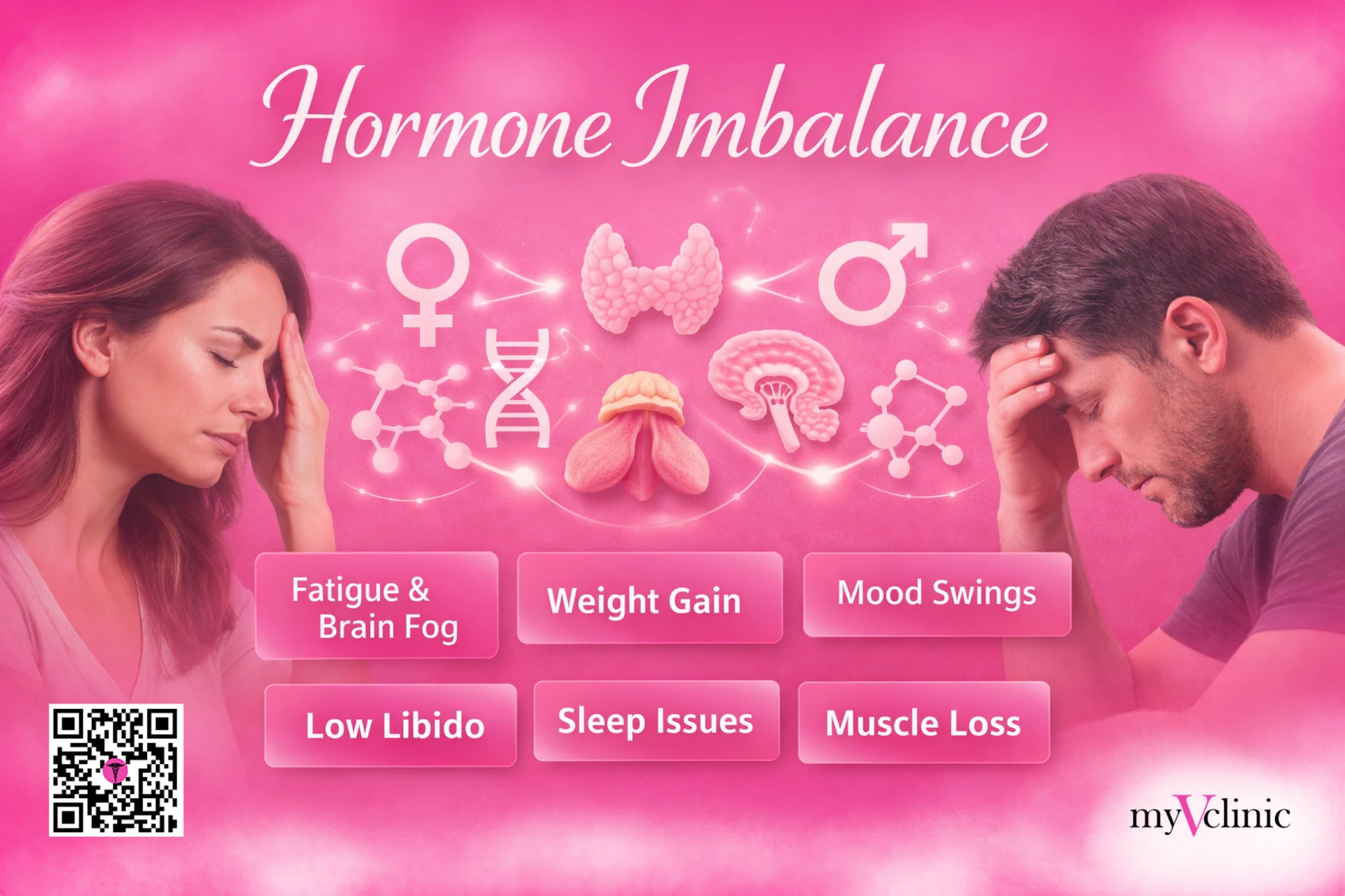
Hormone Imbalance
Hormones are the body’s internal communication system. They quietly regulate energy, metabolism, mood, sleep, libido, weight, temperature, and even how clearly you think. When they are balanced, most people don’t think about them at all. When they drift out of balance, the symptoms can feel scattered, confusing, and easy to dismiss.
If this is your first time hearing this, here’s the key point most people miss: hormone imbalance rarely shows up as one dramatic symptom. It usually shows up as a pattern — small changes that creep in over time and slowly start affecting quality of life.
At My V Clinic, we see many patients who were told their symptoms were “normal,” “just stress,” or “part of getting older.” In reality, their bodies were signaling something measurable and correctable. This guide breaks down the hormone imbalance signs you should not ignore, why they happen, and when it’s time to look deeper with proper lab testing and individualized care.
What Hormone Imbalance Really Means
Hormone imbalance doesn’t necessarily mean your body has stopped producing hormones. More often, it means levels are no longer optimal for how your body functions today. Age, stress, weight changes, medications, inflammation, poor sleep, and metabolic health all influence how hormones are made, converted, and used.
Common hormones involved include estrogen, progesterone, testosterone, cortisol, thyroid hormones, insulin, and DHEA. These systems are interconnected. When one shifts, others often follow.
That’s why symptom-based guessing alone doesn’t work. The goal is to identify patterns, confirm them with objective lab data, and build a plan that supports balance — not just temporary relief.
Fatigue That Doesn’t Improve With Rest
Persistent fatigue is one of the most overlooked hormone imbalance signs. This is not the kind of tiredness that improves with a good night’s sleep or a weekend off. It’s the constant feeling of running on empty.
Hormonal contributors often include thyroid dysfunction, low testosterone, low estrogen, progesterone imbalance, or cortisol dysregulation. When these hormones are off, the body struggles to produce and sustain energy at a cellular level.
If caffeine has become a survival tool instead of a boost, that’s a signal worth paying attention to.
Unexplained Weight Gain or Resistance to Weight Loss
Weight gain linked to hormone imbalance often shows up even when diet and activity haven’t changed. Many patients describe doing “everything right” with no results.
Insulin resistance, cortisol imbalance, thyroid hormone changes, and declining sex hormones can all affect how the body stores fat and uses fuel. In women, perimenopause and menopause are especially common turning points. In men, declining testosterone plays a similar role.
Personalized hormone support, weight loss, and aesthetic care for people ready to feel like themselves again.
This is not about willpower. It’s about biology.
Mood Changes, Anxiety, or Irritability
Hormones influence neurotransmitters in the brain. When they fluctuate, emotional regulation often follows.
Symptoms may include irritability, anxiety, low motivation, mood swings, or feeling emotionally flat. These changes are frequently brushed off as stress or life circumstances, but hormone imbalance can be a hidden driver.
Balanced hormones support emotional resilience. When balance is lost, even small stressors can feel overwhelming.
Poor Sleep or Waking Up Exhausted
Sleep problems are both a cause and a consequence of hormone imbalance. Cortisol, melatonin, progesterone, estrogen, and testosterone all play a role in sleep quality.
Common patterns include difficulty falling asleep, waking up between early morning hours, or sleeping through the night but still feeling unrefreshed.
Without restorative sleep, hormonal systems struggle to recover — creating a feedback loop that worsens symptoms over time.
Brain Fog and Trouble Concentrating
Many patients describe brain fog as one of the most frustrating symptoms. It can feel like slower thinking, poor focus, memory lapses, or difficulty finding words.
Hormonal changes affect blood flow, neurotransmitter signaling, and glucose utilization in the brain. Thyroid imbalance, estrogen shifts, and low testosterone are common contributors.
Mental clarity is not a luxury. It’s a marker of metabolic and hormonal health.
Low Libido or Changes in Sexual Health
A drop in libido is often one of the first hormone imbalance signs people notice — and one of the least discussed.
Sex hormones influence desire, arousal, sensitivity, and overall sexual satisfaction. In women, estrogen and testosterone both matter. In men, testosterone plays a central role.
Changes in libido are not simply psychological. They are frequently biochemical.
Changes in Menstrual Cycles or Menopause Symptoms
For women, irregular cycles, heavier or lighter periods, worsening PMS, hot flashes, night sweats, or vaginal dryness can all point to shifting hormone levels.
Perimenopause can begin years before menopause and is often misunderstood. Symptoms may appear long before periods stop entirely.
These transitions are natural, but suffering through them is not inevitable.
Muscle Loss or Reduced Strength
Hormones influence muscle protein synthesis and recovery. When testosterone, estrogen, or growth-related hormones decline, maintaining muscle becomes more difficult.
Patients may notice decreased strength, slower recovery after exercise, or loss of lean mass despite staying active.
Muscle health is closely tied to metabolism, insulin sensitivity, and long-term vitality.
Why Symptoms Alone Aren’t Enough
Hormone imbalance cannot be diagnosed reliably by symptoms alone. Many symptoms overlap across conditions, and standard screening labs often miss suboptimal levels.
This is why My V Clinic emphasizes comprehensive, lab-guided evaluation. We look at hormone levels in context, assess ratios, and consider how symptoms align with measurable data.
The goal is not to chase numbers. The goal is to restore function.
The Role of Bioidentical Hormone Therapy
Bioidentical hormone therapy uses hormones that are structurally identical to those produced by the human body. When clinically appropriate, they can be used to restore balance under medical supervision.
This approach is individualized, monitored, and adjusted over time. It is not a one-size-fits-all solution and should always be guided by objective lab testing and ongoing assessment.
Hormone therapy is a tool — not a shortcut — and works best as part of a broader lifestyle and metabolic strategy.
When to Seek Professional Evaluation
If multiple symptoms from this list sound familiar, or if they are interfering with daily life, it’s time to look deeper.
Waiting for symptoms to become severe often makes correction harder, not easier. Early evaluation allows for targeted support and clearer answers.
Final Thoughts
Hormone imbalance signs are your body’s way of asking for attention. Ignoring them doesn’t make them disappear — it just delays understanding what’s happening beneath the surface.
With proper evaluation, individualized care, and evidence-based treatment options, balance is often achievable.
This content is for educational purposes only and does not constitute medical advice. It does not diagnose, treat, cure, or prevent any condition. Always consult a qualified healthcare professional regarding symptoms, medications, or treatment decisions.
Related Reading
- Perimenopause and Menopause Hormones: What’s Actually Changing
- What Exactly Is GSM (Genitourinary Syndrome of Menopause)?
- New 2025 Menopause Guidelines: What They Mean in Real Life