

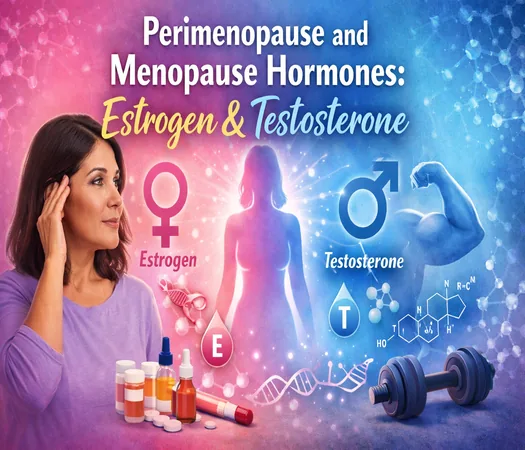
Perimenopause and Menopause Hormones: Estrogen & Testosterone
Perimenopause and Menopause Hormones
If this is your first time hearing this, perimenopause and menopause are not medical failures, and you are not “breaking down.” These are normal life stages that every woman reaches if she lives long enough. What is different today is that women are living decades longer than their ovaries remain fully active. That gap—between reproductive hormones declining and life continuing—creates real physical, emotional, and quality-of-life changes that deserve clear explanation.
For many women, the hardest part isn’t the symptoms themselves. It’s the confusion. Conflicting advice. Fear-based headlines. Outdated warnings. Social media promises that hormones will either “fix everything” or “ruin your health forever.”
Neither extreme is true.
This article is designed to walk you through what actually happens to estrogen and testosterone during perimenopause and menopause, what those changes can affect, and how modern medicine is thinking about hormone support today. Not from a marketing angle. Not from a fear angle. From an education angle.
Understanding the Timeline: Perimenopause vs Menopause
Before talking about hormones, timing matters.
What perimenopause means
Perimenopause is the transition phase before menopause. It can begin in the late 30s or early 40s for some women and last several years.
During perimenopause:
-
Ovaries still produce estrogen and progesterone, but inconsistently
-
Hormone levels fluctuate rather than steadily decline
-
Symptoms often feel unpredictable
This is why many women say, “I don’t feel like myself anymore,” even though lab tests may still look “normal.”
What menopause means
Menopause is defined as 12 consecutive months without a menstrual period, not counting other causes.
After menopause:
-
Ovarian estrogen production drops significantly
-
Hormone levels become more stable, but lower
-
Some symptoms improve, others may appear for the first time
Understanding whether you are in perimenopause or post-menopause helps guide symptom expectations and treatment conversations.
Estrogen: More Than a Reproductive Hormone
Estrogen—specifically estradiol—is often thought of only as a “female reproductive hormone.” In reality, estrogen receptors exist throughout the body.
What estrogen supports
Estrogen plays a role in:
-
Temperature regulation
-
Sleep quality
-
Vaginal and urinary tissue health
-
Bone remodeling
-
Skin thickness and elasticity
-
Blood vessel function
-
Certain aspects of mood and cognition
When estrogen levels fluctuate or decline, multiple systems can be affected at once.
Personalized hormone support, weight loss, and aesthetic care for people ready to feel like themselves again.
Common estrogen-related symptoms
During perimenopause and menopause, lower or unstable estrogen may contribute to:
-
Hot flashes and night sweats
-
Sleep disruption
-
Vaginal dryness or irritation
-
Pain with intercourse
-
Urinary urgency or recurrent UTIs
-
Joint aches
-
Skin thinning or dryness
Not every woman experiences all of these, and severity varies widely.
Genitourinary Syndrome of Menopause (GSM)
If this is your first time hearing this term, genitourinary syndrome of menopause (GSM) describes vaginal and urinary changes related to estrogen decline.
GSM can include:
-
Vaginal dryness or burning
-
Irritation or itching
-
Pain with intercourse
-
Urinary urgency or frequency
-
Recurrent urinary tract infections
This is not a hygiene issue. It is not “just aging.” It reflects real tissue changes driven by hormone signaling.
Local (vaginal) estrogen therapy is commonly used for GSM because it targets the tissue directly with minimal systemic exposure. This distinction is important and often misunderstood.
Progesterone: The Balancing Hormone
Progesterone is often discussed only in relation to protecting the uterine lining when systemic estrogen is used. But progesterone also interacts with the brain and nervous system.
Some women report that progesterone:
-
Supports sleep quality
-
Has a calming effect
-
Helps counter estrogen-related breast tenderness
It’s important to distinguish progesterone from progestins, which are synthetic compounds with different effects and risk profiles.
Testosterone in Women: Clearing Up the Confusion
Testosterone is not a “male-only” hormone. Women produce testosterone throughout life, though in much smaller amounts than men.
What testosterone may influence in women
Testosterone can contribute to:
-
Sexual desire and arousal (for some women)
-
Sexual comfort and orgasm quality
-
Energy and motivation
-
Muscle strength when paired with resistance training
-
Bone health as part of the overall hormone environment
Testosterone is not a cure-all, and it does not affect every woman the same way.
Why dosing matters
When testosterone is discussed online, the conversation often skips an essential concept: physiologic dosing.
Physiologic dosing means keeping hormone levels within the range a female body would naturally experience. Problems tend to arise when dosing exceeds that range.
Potential side effects of excessive testosterone may include:
-
Acne or oily skin
-
Unwanted hair growth
-
Scalp hair thinning
-
Voice changes (rare but important)
-
Mood shifts
Precision matters more than intensity.
Why Testosterone Access Is Complicated
In the United States, there is no widely available FDA-approved testosterone product specifically formulated at female doses. Because of this:
-
Some clinicians carefully adjust male formulations
-
Some women are prescribed compounded products
-
Dosing consistency can vary
This is why recent medical discussions—including FDA-level conversations—have emphasized the need for clearer guidance and safer standardization.
The goal is not to push testosterone on everyone. The goal is to improve clarity, safety, and access for women who may benefit.
Systemic vs Local Hormone Therapy
One of the biggest sources of confusion in menopause care is the difference between systemic and local hormone therapy.
Systemic hormone therapy
Systemic estrogen (pills, patches, gels, sprays) circulates throughout the body and may be used for:
-
Hot flashes
-
Night sweats
-
Sleep disruption related to vasomotor symptoms
Systemic therapy requires individualized risk discussion and, in women with a uterus, progesterone protection.
Local hormone therapy
Local (vaginal) estrogen is used primarily for GSM and urinary symptoms. It acts locally on tissue with minimal systemic absorption in many cases.
This distinction is critical. Treating these therapies as identical has contributed to unnecessary fear and under-treatment.
Age, Timing, and Risk Considerations
Hormone therapy is not one-size-fits-all.
Risk considerations may include:
-
Personal or family history of hormone-sensitive cancers
-
Prior blood clots or clotting disorders
-
Cardiovascular health
-
Liver disease
-
Time since menopause
Many discussions emphasize that starting systemic hormone therapy earlier in the menopause transition may carry a different risk profile than starting much later, but individual assessment always matters.
Hormones and Mental Health in Midlife
Perimenopause is increasingly recognized as a vulnerable window for mood changes.
Hormonal shifts may contribute to:
-
Anxiety
-
Depressive symptoms
-
Irritability
-
Brain fog
-
Reduced stress tolerance
Hormones are not replacements for mental health care, but for some women, addressing hormonal contributors can be an important part of a comprehensive plan.
What Hormone Therapy Can and Cannot Do
Hormone therapy may help:
-
Reduce hot flashes and night sweats
-
Improve vaginal and urinary symptoms
-
Support sleep disrupted by hormonal shifts
-
Reduce fracture risk in some contexts
Hormone therapy is not:
-
A guaranteed fix for fatigue or weight gain
-
A cure for depression
-
An anti-aging solution
-
Mandatory for healthy aging
Thoughtful use means clear goals, ongoing reassessment, and respect for individual preferences.
What a Responsible Hormone Conversation Looks Like
A meaningful menopause consultation usually includes:
-
Symptom review
-
Medical and family history
-
Medication review
-
Lifestyle context
-
Discussion of risks, benefits, and alternatives
Lab testing may be helpful in certain situations, but numbers alone rarely tell the full story—especially during perimenopause.
The Bottom Line
Perimenopause and menopause are normal transitions, but that doesn’t mean women should suffer in silence or navigate misinformation alone.
Estrogen and testosterone influence far more than reproduction. Understanding how these hormones change—and what those changes can affect—allows women to make informed decisions with their clinicians.
At My V Clinic, we believe hormone care should be:
-
Evidence-based
-
Individualized
-
Transparent
-
Free from hype and fear
You deserve clarity. You deserve context. And you deserve care that respects both science and lived experience.
FAQs
1. How do I know if I’m in perimenopause?
Irregular cycles, new PMS symptoms, sleep issues, and mood changes in your 40s may suggest perimenopause, even if periods continue.
2. Do hormone levels need to be tested?
Sometimes. In perimenopause, labs can fluctuate widely, so symptoms often guide decisions more than single lab values.
3. Is estrogen safe?
Estrogen can be safe and helpful for many women, but safety depends on formulation, dose, timing, and personal health history.
4. What is GSM?
Genitourinary syndrome of menopause describes vaginal and urinary changes related to estrogen decline.
5. Can vaginal estrogen affect the whole body?
Low-dose vaginal estrogen generally acts locally, with minimal systemic absorption in many women.
6. Is testosterone appropriate for all women?
No. Testosterone may help some women, particularly for sexual concerns, but it is not universally beneficial.
7. Can hormones help with sleep?
They may help if sleep disruption is related to hormonal changes, especially night sweats or progesterone sensitivity.
8. Is hormone therapy preventative medicine?
Hormones may support long-term health in certain contexts, but they are not broadly prescribed solely for prevention.
9. Can I start hormones later in life?
Possibly, but the decision requires careful, individualized risk discussion.
10. What if I choose not to use hormones?
That is a valid choice. Non-hormonal options and lifestyle strategies can also support quality of life.
Related Reading
This content is for educational purposes only and does not constitute medical advice. It does not diagnose, treat, cure, or prevent any condition. Always consult a qualified healthcare professional regarding symptoms, medications, or treatment decisions.