

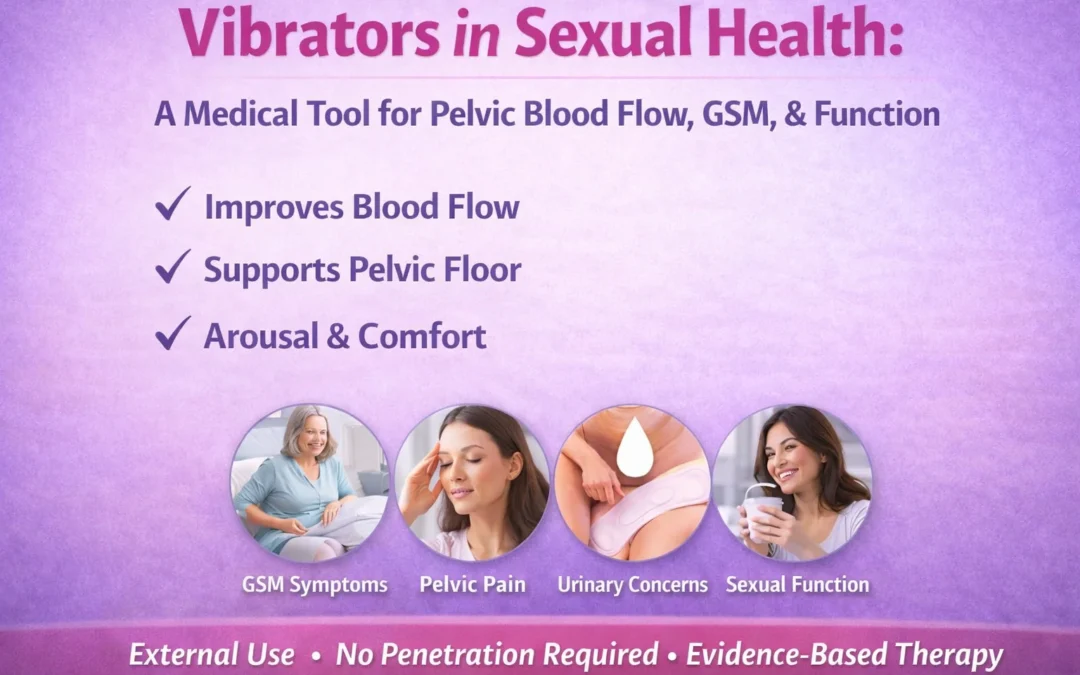
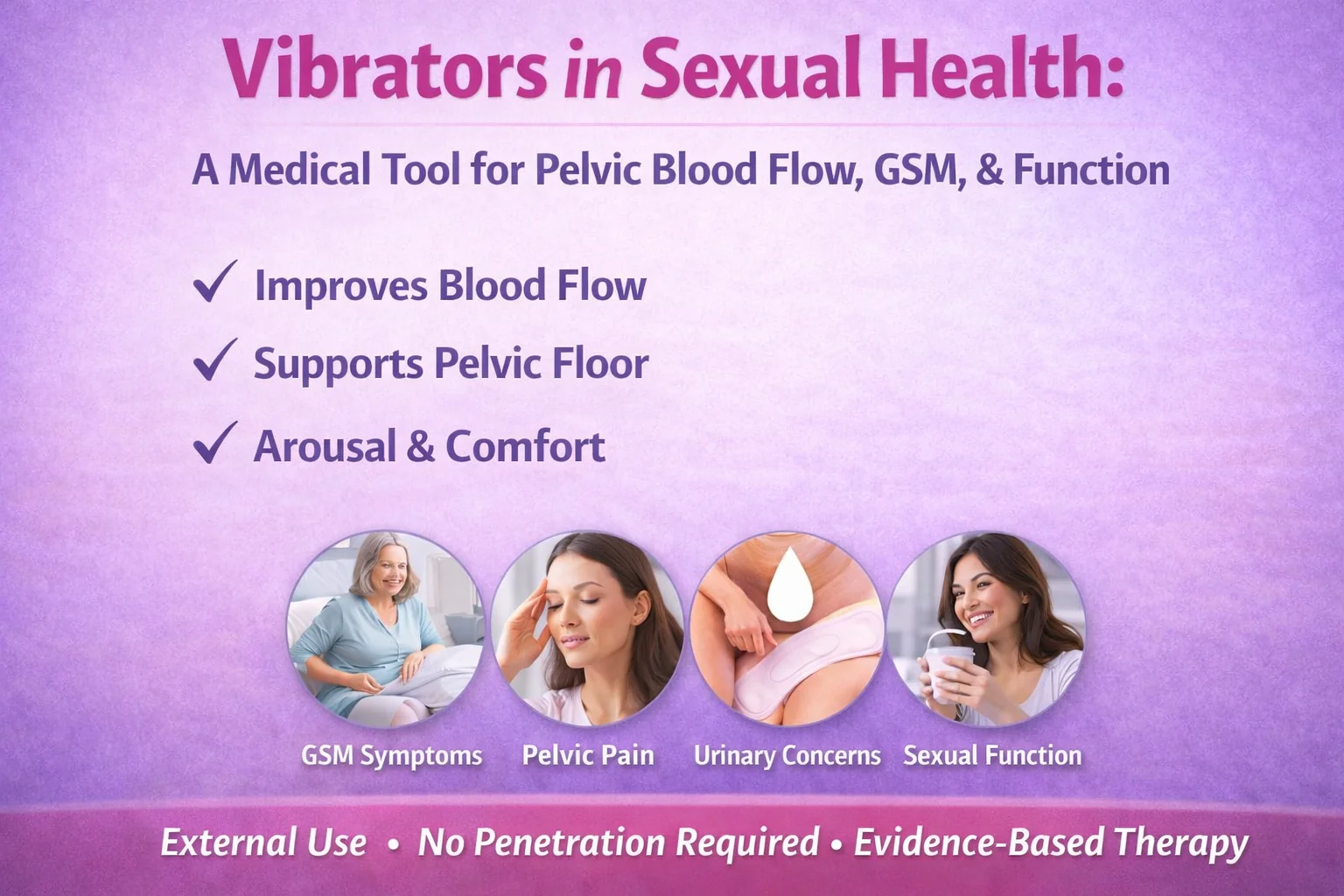
Vibrators in Sexual Health: A Medical Tool for Pelvic Blood Flow, GSM, and Function
Vibrators in Sexual Health
Sexual health is often treated as optional or uncomfortable to discuss—until menopause, pain, or urinary symptoms make it unavoidable. Many women are then given advice that relies on motivation rather than physiology: use more lubricant, relax, drink wine, try to want it more.
At My V Clinic, we treat sexual health the same way we treat any other body system. When symptoms appear, we look at tissue health, blood flow, nervous system signaling, pelvic floor mechanics, and habits that support function. We also acknowledge reality: many women are tired, stressed, busy, and not interested in sexual performance on demand. That does not mean their bodies do not deserve care.
Vibration can be used as a therapeutic pelvic health tool, not a performance requirement and not a partner obligation.
Used appropriately, vibration may support:
-
Genital blood flow
-
Tissue comfort and arousal response
-
Pelvic floor relaxation
-
Sexual and urinary symptom improvement
It can be used externally, does not require penetration, and does not require orgasm.
This is not a cure, not a replacement for medical evaluation, and not a substitute for evidence-based treatment of genitourinary syndrome of menopause (GSM). But it is a reasonable adjunct therapy supported by emerging clinical data.
What counts as sexual health
Sexual health includes far more than intercourse. Clinically, it encompasses:
-
Desire and interest
-
Arousal response and genital sensation
-
Lubrication and tissue comfort
-
Orgasm ability and quality
-
Pelvic pain, burning, irritation, or tearing
-
Urinary urgency, frequency, or leakage
-
Emotional safety, stress load, and body image
Hormonal changes in peri- and postmenopause often lead to genitourinary syndrome of menopause (GSM), which affects vulvar, vaginal, and urinary tissues. GSM is common, often progressive without treatment, and frequently under-addressed in routine care.
Vibration therapy does not replace hormonal or medical GSM treatment, but it may support blood flow and neural signaling alongside standard care.
Why vibration is biologically plausible
Blood flow and tissue support
Genital blood flow is foundational to arousal, lubrication, and tissue health. The concept of tissue rehabilitation through stimulation is well established in male sexual medicine, and similar physiologic principles apply to vulvovaginal tissue. Regular vibratory stimulation has been shown to increase genital blood flow and improve vaginal perfusion and lubrication.
Pelvic floor function
Pelvic floor disorders are influenced by childbirth, aging, connective tissue changes, and menopause. Pelvic floor physical therapy is evidence-based and often includes relaxation training, manual therapy, and biofeedback. Vibratory stimulation has been associated with improvement in pelvic floor symptoms and quality of life, particularly urinary and prolapse-related symptoms, though exam findings may not always change.
Personalized hormone support, weight loss, and aesthetic care for people ready to feel like themselves again.
Neuromodulation and pain gating
Vibration activates superficial and deep nerve receptors that transmit signals to the spinal cord, influencing pelvic organ sensation and pain perception. This neuromodulatory effect provides a biologically plausible explanation for symptom improvement in pain, urgency, and arousal response.
The study that changed the conversation
A prospective pilot study by Dubinskaya et al. evaluated regular vibrator use in women receiving urogynecology care. Findings included:
-
Significant improvement in sexual function domains including desire, arousal, orgasm, and satisfaction
-
Improvement in bothersome pelvic floor symptoms
-
Statistically significant improvement in the severity of vaginal atrophy
-
Statistically significant improvement in the gross appearance of lichen sclerosus lesions
-
Trends toward improvement in urinary symptoms
Importantly, external vulvar stimulation was used, reducing barriers for peri- and postmenopausal women and those with discomfort or concern about penetration.
The study supports vibrator use as a rehabilitative adjunct, not a replacement for standard therapies.
What this does—and does not—mean
This means:
-
Vibration may support sexual and pelvic health as part of a broader care plan
-
External use is appropriate and evidence-aligned
-
Orgasm is not required for benefit
This does not mean:
-
Everyone should use a vibrator
-
Vibration replaces evaluation or diagnosis
-
Vibration cures GSM or lichen sclerosus
-
Vibration replaces vaginal estrogen, DHEA, or other indicated therapies
-
Pain should be pushed through
Lichen sclerosus, for example, requires high-potency topical corticosteroids as first-line therapy and ongoing follow-up, with adjunctive tools considered only in context.
Who may benefit most
Based on current evidence and clinical patterns, vibration may be most helpful for:
-
GSM symptoms alongside appropriate medical treatment
-
Reduced arousal response or diminished genital sensation
-
Pelvic floor tension or guarding patterns
-
Mild urinary urgency or urge incontinence as part of a broader plan
-
Chronic pelvic pain where gentle sensory input reduces guarding
-
Patients seeking solo, stigma-free self-care
External use matters
Vibrators do not require insertion.
External vulvar stimulation was intentionally selected in published protocols to improve comfort, accessibility, and adherence.
Starting externally is appropriate and effective.
A practical, rehab-style protocol
Think pelvic rehabilitation, not performance.
Goal: consistency, not orgasm
-
5–10 minutes
-
2–3 times per week
-
Approximately 12 weeks, then reassess
Placement: external only
-
Clitoral hood or clitoral area with light pressure
-
Vulvar tissue near the vaginal opening
-
Mons pubis if direct contact is initially too sensitive
Settings
-
One comfortable setting
-
Avoid frequent pattern changes
-
Low intensity and predictable input
Pair with relaxation cues
-
Slow breathing with longer exhale
-
Jaw and shoulders relaxed
-
Pelvic floor “drop” cue
Track symptoms objectively and reassess if symptoms worsen.
Safety considerations
-
Do not share devices
-
Clean after each use
-
Avoid fragranced cleaners
-
External use first if UTI-prone
-
Pause with active infection, open sores, or severe fissures
-
Follow standard medical treatment first for conditions like lichen sclerosus
How this fits into GSM care
Evidence-based GSM management includes local vaginal estrogen, vaginal DHEA, moisturizers, and other therapies depending on individual risk and history.
Vibration may be adjunctive, supporting blood flow and neural signaling alongside medical therapy.
Bottom line
Vibrators are not novelty items in this context.
They are potential pelvic rehabilitation tools supported by emerging clinical evidence.
When framed without shame and used alongside appropriate medical care, vibration can support sexual and pelvic health in a way that respects physiology, autonomy, and real life.
FAQ: Vibrators in Sexual Health
Do vibrators replace vaginal estrogen or GSM treatment
No. Vibrators do not replace evidence-based treatment for genitourinary syndrome of menopause. GSM is a hormonal condition, and standard care may include local vaginal estrogen, vaginal DHEA, moisturizers, or other clinician-guided therapies. Vibration may be used as an adjunct to support blood flow and neural signaling alongside medical treatment.
Is penetration required for benefit
No. Published clinical protocols used external vulvar stimulation only. External use improves accessibility and comfort, particularly for peri- and postmenopausal patients or those with discomfort or concern about insertion.
Is orgasm required for therapeutic benefit
No. The available clinical data does not require orgasm for benefit. Vibration was used with a goal of consistency rather than sexual performance, supporting blood flow and neuromodulation independent of orgasm.
Is vibration safe during menopause
For most patients, external vibration is safe when used gently and appropriately. Patients with persistent pain, bleeding, new lesions, or known vulvar conditions should consult a clinician before use. Vibration should not replace evaluation or treatment of underlying conditions.
Can vibration cure GSM or lichen sclerosus
No. Vibration does not cure GSM or lichen sclerosus. Lichen sclerosus requires first-line treatment with high-potency topical corticosteroids and ongoing follow-up. Vibration may be considered only as an adjunct tool within a clinician-guided care plan.
Sources
genitourinary syndrome of menopause
pelvic blood flow therapy
external vibration therapy
pelvic floor relaxation
menopause sexual health
vulvar vibration therapy
pelvic rehabilitation tools
This content is for educational purposes only and does not constitute medical advice. It does not diagnose, treat, cure, or prevent any condition. Always consult a qualified healthcare professional regarding symptoms, medications, or treatment decisions.
Related Reading
- Menopause Care and Symptom Support
- Hormone Therapy Options and Safety Basics
- Sexual Wellness After 40
- GSM: Vaginal and Urinary Symptoms Explained
This content is for educational purposes only and does not constitute medical advice. It does not diagnose, treat, cure, or prevent any condition. Always consult a qualified healthcare professional regarding symptoms, medications, or treatment decisions.