


Menopause Weight Gain: Causes, Science, and Safe Weight Loss Support in Thornton, CO
Menopause Weight Gain
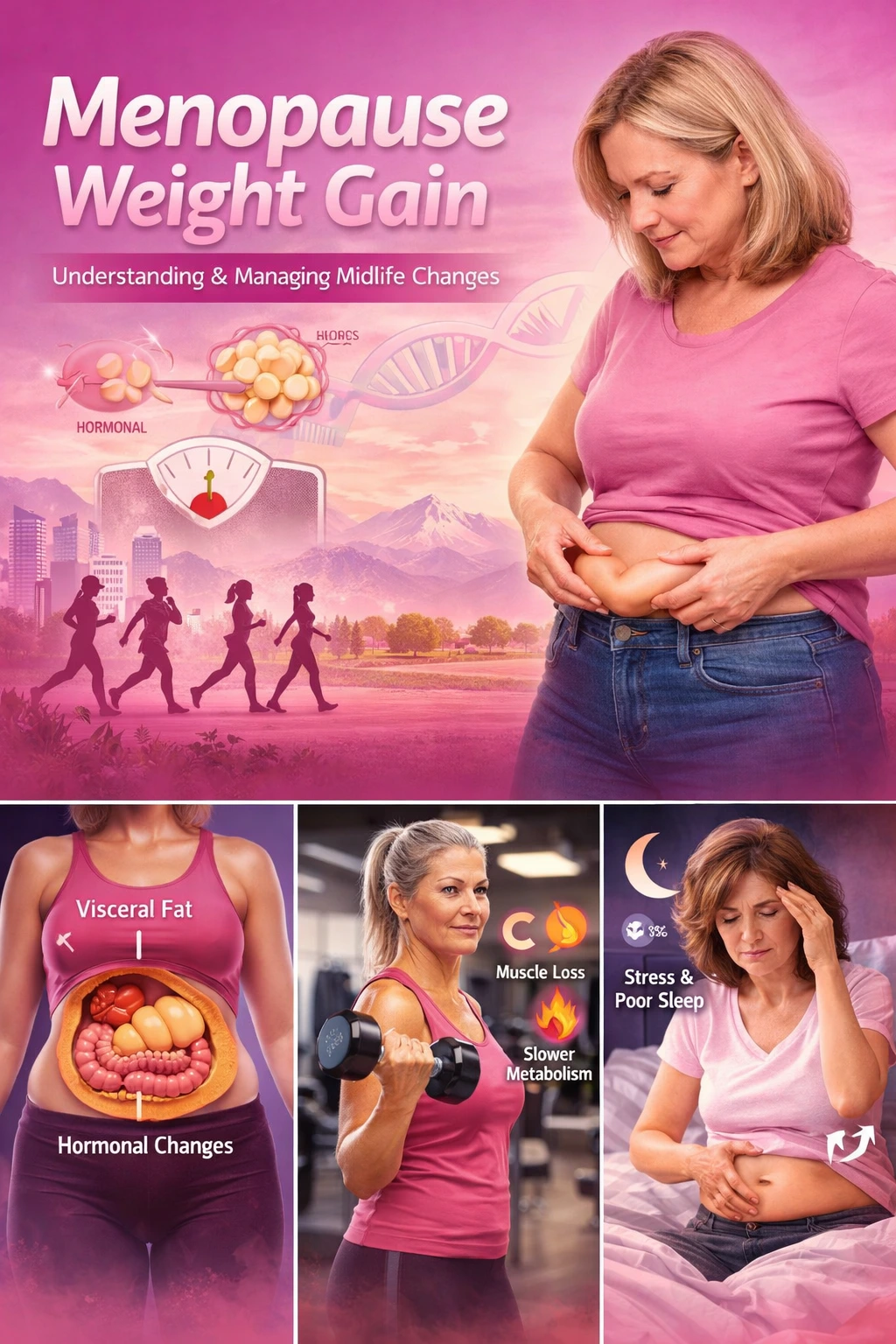
Weight gain during menopause is one of the most common — and most frustrating — concerns women bring up in midlife healthcare visits. If this is your first time hearing this explained clearly, menopause-related weight gain is not simply about calories or willpower. It is driven by documented hormonal, metabolic, and physiologic changes that alter how the body stores fat, preserves muscle, and regulates appetite.
At My V Clinic in Thornton, CO, we focus on evidence-based education and medically responsible support for women navigating menopause-related weight changes. This article explains why menopause weight gain happens, what the science actually shows, and how weight management can be approached safely and realistically during this stage of life.
What Is Menopause Weight Gain?
Menopause weight gain refers to the gradual increase in body weight and central (abdominal) fat accumulation that commonly occurs during perimenopause and postmenopause. Multiple large population studies show that women gain an average of 1–2 pounds per year during midlife, even when diet and activity remain unchanged.
According to the Mayo Clinic, menopause-related weight gain is associated with:
-
Hormonal shifts (particularly declining estrogen)
-
Loss of lean muscle mass
-
Reduced resting metabolic rate
-
Changes in insulin sensitivity
-
Altered fat distribution toward visceral (abdominal) fat
https://www.mayoclinic.org/healthy-lifestyle/womens-health/in-depth/menopause-weight-gain/art-20046058
The Real Causes of Weight Gain During Menopause
Declining Estrogen Alters Fat Storage
Estrogen plays a role in fat distribution and energy regulation. As estrogen levels fall, fat storage shifts away from hips and thighs and toward the abdomen. Research published by the National Institutes of Health shows that lower estrogen levels are associated with increased visceral fat accumulation, which carries higher cardiometabolic risk.
https://www.ncbi.nlm.nih.gov/pmc/articles/PMC3117316/
Muscle Loss Slows Metabolism
Aging and menopause both accelerate sarcopenia, the gradual loss of skeletal muscle. Muscle tissue burns more calories at rest than fat tissue. As lean mass decreases, resting metabolic rate drops, meaning fewer calories are burned throughout the day.
A review in The Journal of Clinical Endocrinology & Metabolism confirms that postmenopausal women experience a measurable decline in energy expenditure independent of lifestyle habits.
https://academic.oup.com/jcem/article/95/9/4072/2596323
Insulin Sensitivity Changes
Menopause is associated with reduced insulin sensitivity, which makes it easier for glucose to be stored as fat, especially around the abdomen. This mechanism is documented by the North American Menopause Society, which notes increased risk for metabolic syndrome after menopause.
https://www.menopause.org/for-women/menopauseflashes/metabolic-changes
Sleep Disruption and Cortisol
Personalized hormone support, weight loss, and aesthetic care for people ready to feel like themselves again.
Hot flashes, night sweats, and fragmented sleep increase cortisol levels. Elevated cortisol has been shown to promote abdominal fat storage and appetite dysregulation. Studies in Sleep Medicine Reviews link poor sleep quality directly to increased BMI and waist circumference in midlife women.
https://www.sciencedirect.com/science/article/pii/S1087079218301542
Why Belly Fat Increases After Menopause
Menopause-related weight gain is not evenly distributed. Research consistently shows a shift toward visceral fat, which surrounds internal organs and contributes to inflammation, cardiovascular disease, and insulin resistance.
According to the Harvard Medical School, visceral fat behaves differently than subcutaneous fat and is metabolically active, increasing disease risk even when overall weight gain is modest.
https://www.health.harvard.edu/staying-healthy/the-danger-of-visceral-fat
Thornton, CO Weight Loss Considerations During Menopause
Women in Thornton and across Colorado face additional challenges:
-
Seasonal activity fluctuations during winter months
-
High stress levels linked to work-life demands
-
Altitude-related appetite and hydration changes
Sustainable menopause weight loss requires local lifestyle awareness, not generic diet advice. At My V Clinic, education emphasizes metabolic health, muscle preservation, and realistic expectations rather than rapid scale changes.
What Science-Based Weight Loss Looks Like During Menopause
Nutrition Focus: What Actually Works
Research supports nutrient-dense, protein-forward eating patterns rather than calorie extremes.
Evidence-based dietary priorities:
-
Adequate protein intake to preserve lean muscle mass
-
High fiber intake to improve insulin response and satiety
-
Reduced ultra-processed carbohydrate consumption
-
Consistent meal timing
The American Journal of Clinical Nutrition reports that higher protein intake in postmenopausal women is associated with better body composition outcomes.
https://academic.oup.com/ajcn/article/101/6/1320/4564484
Exercise That Supports Hormonal Physiology
Cardio alone is insufficient during menopause. Resistance training is essential.
Evidence-supported movement priorities:
-
Strength training two to three times weekly
-
Moderate-intensity aerobic activity
-
Daily low-impact movement (walking, mobility work)
A randomized controlled trial published in Obesity Reviews shows resistance training significantly improves fat distribution and insulin sensitivity in postmenopausal women.
https://onlinelibrary.wiley.com/doi/10.1111/obr.13106
Sample Menopause-Supportive Meal Plan (Educational Example)
Breakfast
-
Greek yogurt or eggs
-
Berries or vegetables
-
Healthy fat (nuts, olive oil)
Lunch
-
Lean protein (chicken, fish, tofu)
-
High-fiber vegetables
-
Whole food carbohydrate (quinoa, lentils)
Snack
-
Protein-rich option (cottage cheese, hummus)
Dinner
-
Protein-focused entrée
-
Non-starchy vegetables
-
Limited refined carbohydrates
This structure aligns with metabolic research without extreme restriction.
Sample Menopause-Friendly Exercise Structure
-
Two days full-body resistance training
-
Two to three days brisk walking or cycling
-
Daily mobility or stretching
-
Emphasis on consistency over intensity
According to the Centers for Disease Control and Prevention, this approach supports metabolic health and functional aging.
https://www.cdc.gov/physicalactivity/basics/pa-health/index.htm
What Does Not Work (According to Science)
-
Crash dieting
-
Severe calorie restriction
-
Over-reliance on cardio
-
Ignoring sleep quality
-
One-size-fits-all hormone claims
The Mayo Clinic warns that aggressive dieting can worsen muscle loss and slow metabolism further during menopause.
Final Takeaway
Menopause weight gain is biological, measurable, and well-documented in medical literature. It is not a failure of discipline. Sustainable weight management during menopause requires understanding hormonal physiology, protecting muscle mass, supporting sleep, and using evidence-based strategies.
At My V Clinic in Thornton, CO, our role is education, guidance, and responsible care — not shortcuts or promises. Understanding the science allows women to make informed decisions about their health during menopause and beyond.
This content is for educational purposes only and does not constitute medical advice. It does not diagnose, treat, cure, or prevent any condition. Always consult a qualified healthcare professional regarding symptoms, medications, or treatment decisions.
Related Reading
This content is for educational purposes only and does not constitute medical advice. It does not diagnose, treat, cure, or prevent any condition. Always consult a qualified healthcare professional regarding symptoms, medications, or treatment decisions.