

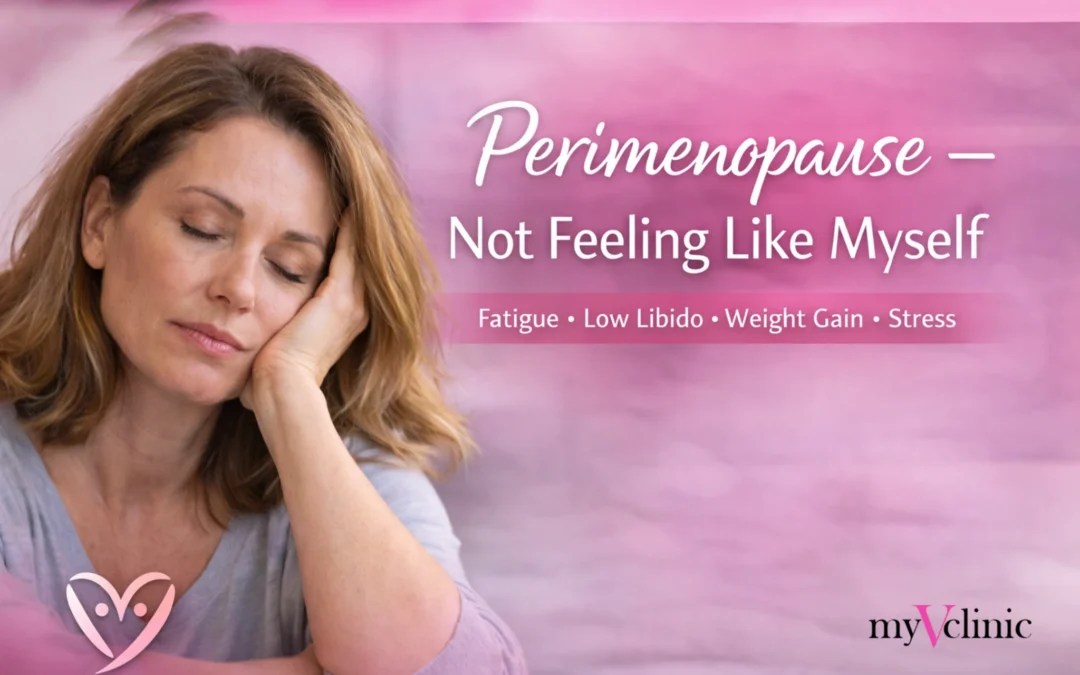
Perimenopause – Not Feeling Like Myself
Perimenopause
Most women don’t wake up one morning and think, “I must be entering perimenopause.”
They think something much simpler — and much harder to explain:
“I don’t feel like myself anymore.”
It’s not one dramatic symptom.
It’s not always obvious.
And it’s rarely something anyone warned you about.
Instead, it’s a slow accumulation of changes that don’t quite fit into a neat box. You’re still functioning. You’re still showing up. But your body, your energy, your emotions, and even your sense of connection don’t feel the way they used to.
For many women, this is how perimenopause begins.
At My V Clinic, we hear this phrase every day. Not as a complaint — but as a signal. Because “not feeling like myself” is often how the body communicates that a transition is underway.
What Perimenopause Can Feel Like
Perimenopause is the transitional phase leading up to menopause, and it can begin years before periods stop completely. During this time, hormone signaling becomes less predictable — and the effects are often felt throughout the body.
This is why symptoms don’t show up in isolation.
Common Physical Symptoms
-
Fatigue that doesn’t improve with rest
-
Weight gain that feels sudden or unexplained
-
Changes in where weight is carried, especially around the midsection
-
Joint pain, stiffness, or new aches
-
Slower recovery after exercise
-
Headaches or migraines that feel different than before
Many women are told these changes are due to aging, stress, or lifestyle. While those factors can play a role, timing matters — and so does pattern recognition.
Mental and Emotional Changes
-
Brain fog or trouble concentrating
-
Feeling less sharp or confident
-
Irritability or emotional numbness
-
Anxiety that feels unfamiliar
-
Low motivation or enjoyment
These shifts can be particularly unsettling for women who have always felt mentally resilient and capable.
Personalized hormone support, weight loss, and aesthetic care for people ready to feel like themselves again.
Changes in Sexual Health and Libido
-
Lower libido or reduced interest in sex
-
Decreased arousal or physical response
-
Vaginal dryness, irritation, or discomfort
-
Pain with intimacy
-
Feeling disconnected from desire
These experiences are common — and commonly misunderstood. Libido is not just psychological. It is influenced by hormones, blood flow, sleep, stress, and physical comfort, Read More here Dr. Rachel Rubin
Why Perimenopause Is So Often Missed
One of the reasons perimenopause goes unrecognized is that hormone levels don’t simply drop and stay low.
They fluctuate.
Some days estrogen may be higher than expected. Other days, much lower. Progesterone and testosterone patterns can also change. This variability can create symptoms even when blood tests appear “normal.”
Perimenopause isn’t defined by one lab value. It’s defined by how the body responds to changing signals.
Stress and the Perimenopause Amplifier Effect
Stress doesn’t cause perimenopause — but it can make symptoms louder.
During midlife, many women are managing demanding careers, caregiving responsibilities, family needs, and long-term stress exposure. When hormonal signaling becomes less stable, the body often becomes more sensitive to stress.
Sleep disruption, emotional reactivity, and fatigue can intensify — even when life circumstances haven’t changed.
This is not a personal failure.
It’s physiology.
Weight Gain That Doesn’t Respond the Way It Used To
Weight changes during perimenopause can be one of the most frustrating experiences women face.
This is not about discipline or effort.
During perimenopause:
-
Muscle mass may decline more easily
-
Fat distribution often shifts toward the abdomen
-
Insulin sensitivity can change
-
Sleep disruption affects hunger and satiety hormones
These shifts can occur even when diet and activity remain consistent. Understanding this context matters — because shame and self-blame don’t help.
Women’s Libido During Perimenopause
Libido is influenced by far more than desire alone.
Hormones, sleep quality, stress levels, emotional safety, and physical comfort all play a role. Many women notice changes in libido well before menopause, but feel uncomfortable bringing it up — or assume it’s something they should simply accept.
Low libido is not a character flaw.
It is not a lack of love.
And it is not “just in your head.”
It is often a biological signal that deserves thoughtful attention.
Is This Just Aging?
Aging is inevitable. Feeling unwell is not.
Perimenopause is not about trying to feel twenty again. It’s about understanding what’s changing and supporting function, comfort, and quality of life through a normal life transition.
Dismissal helps no one.
Information does.
Where My V Clinic Fits In
At My V Clinic, care begins with listening.
That means:
-
Allowing time for the full story
-
Looking for patterns instead of isolated symptoms
-
Focusing on education and clarity
-
Supporting individualized, informed decision-making
There is no one-size-fits-all approach to perimenopause. Understanding options — and choosing what aligns with your goals — is central to our approach.
You’re Not Imagining This
If you’ve been told your symptoms are “just stress,” “normal aging,” or something you should push through — and you still don’t feel like yourself — your experience is valid.
You’re not broken.
You’re not weak.
And you’re not alone.
Understanding what’s happening is often the first step toward feeling grounded again.
.
This content is for educational purposes only and does not constitute medical advice. It does not diagnose, treat, cure, or prevent any condition. Always consult a qualified healthcare professional regarding symptoms, medications, or treatment decisions.
Related Reading
This content is for educational purposes only and does not constitute medical advice. It does not diagnose, treat, cure, or prevent any condition. Always consult a qualified healthcare professional regarding symptoms, medications, or treatment decisions.