

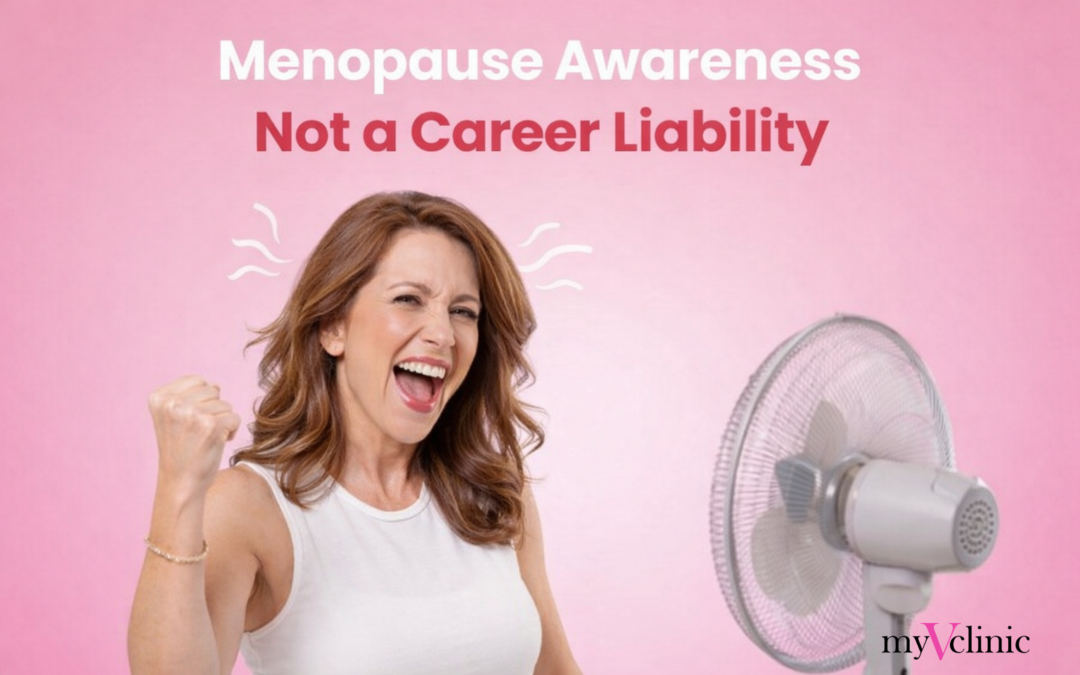
Menopause Awareness Is Not a Career Liability
Menopause Awareness
Why Menopause Still Gets Treated Like a Workplace Problem — and Why That Has to Change
Menopause is not a personal failure, a professionalism issue, or a reason to sideline experienced women. Yet in workplaces across the country, that’s exactly how it’s treated — quietly, awkwardly, or not at all.
For millions of women, menopause occurs during peak career years. These are the years when leadership skills are sharp, institutional knowledge is deep, and professional judgment has been earned through decades of experience. And yet, menopause remains one of the last openly ignored health transitions in professional life.
If this is your first time hearing menopause discussed in the context of work, that’s not accidental. The silence has been longstanding — and costly.
At My V Clinic, menopause awareness is not framed as a cultural trend or an emotional talking point. It is treated as what it actually is: a predictable biological transition that deserves informed support, not professional penalties.
Menopause Is a Life Stage, Not a Decline
Menopause is often misunderstood as a sudden event. In reality, it is a gradual transition, often beginning years before a final menstrual period and continuing long after.
During this time, fluctuating estrogen, progesterone, and sometimes testosterone levels can affect:
-
Sleep quality
-
Thermoregulation (hot flashes and night sweats)
-
Cognitive processing and focus
-
Mood stability and stress tolerance
-
Energy levels and physical resilience
These changes are physiological — not motivational, emotional, or indicative of reduced competence.
Yet many women feel pressured to hide symptoms, push through exhaustion, or avoid seeking accommodations out of fear they will be perceived as unreliable or “past their prime.”
That fear is not unfounded. Studies consistently show that women experiencing menopause symptoms are more likely to:
-
Be passed over for advancement
-
Reduce hours involuntarily
-
Leave the workforce earlier than planned
This is not a menopause problem. This is a workplace education problem.
The Real Cost of Menopause Stigma at Work
When menopause is ignored or minimized, everyone loses — not just women.
Organizations lose:
-
Experienced leadership
-
Mentorship capacity
-
Continuity and institutional knowledge
-
Retention of high-performing employees
Women lose:
-
Career momentum
-
Confidence
-
Financial security
-
Professional identity
Personalized hormone support, weight loss, and aesthetic care for people ready to feel like themselves again.
And healthcare systems lose opportunities for early, proactive support that could prevent years of unnecessary struggle.
Menopause awareness is not about lowering standards. It’s about aligning expectations with biology, just as workplaces already do for pregnancy, recovery from illness, or disability accommodations.
Why “Power Through It” Is the Wrong Message
Cultural messaging around menopause often swings between two extremes:
-
Silence and shame
-
Over-positivity and “empowerment” slogans
Neither helps.
Menopause does not require cheerleading. It requires understanding.
For many women, symptoms are manageable. For others, they are disruptive. Both realities can exist at the same time — and neither should determine a woman’s professional value.
Framing menopause as something women should simply “push through” reinforces stigma and delays care. It also ignores the fact that symptoms can often be improved with proper evaluation, education, and individualized support.
Menopause Awareness Is About Retention, Not Accommodation Theater
True menopause awareness in the workplace is quiet, practical, and respectful. It does not single women out or force disclosure.
It looks like:
-
Flexible scheduling when symptoms flare
-
Temperature-neutral work environments when possible
-
Normalized conversations about midlife health transitions
-
Managers trained to respond with neutrality, not discomfort
This is not about special treatment. It is about smart leadership.
Organizations that adapt to the realities of menopause are not being generous — they are being strategic.
Where My V Clinic Fits In
At My V Clinic, menopause care is rooted in education, evidence, and individualized assessment. We do not frame menopause as a diagnosis or a problem to be “fixed.” We approach it as a phase that deserves context, clarity, and informed options.
Our role is to help women:
-
Understand what changes are normal
-
Identify symptoms that deserve evaluation
-
Learn about evidence-based support options
-
Advocate for themselves in healthcare and professional settings
We emphasize responsible, non-sensationalized information. No promises. No one-size-fits-all plans. No pressure.
Menopause awareness starts with accurate information — not fear, not hype, and not silence.
Experience Does Not Expire
The idea that menopause diminishes professional capability is outdated and unsupported by evidence.
What actually diminishes performance is:
-
Chronic sleep disruption without support
-
Untreated symptoms due to stigma
-
Anxiety about being perceived as “less capable”
When menopause is acknowledged and understood, women stay engaged, productive, and confident — not despite menopause, but alongside it.
Menopause awareness is not about lowering expectations.
It is about removing unnecessary barriers.
The Bottom Line
Menopause awareness is not a trend.
It is not a liability.
And it is certainly not a reason to sideline capable women.
It is a matter of education, respect, and common sense.
At My V Clinic, we believe informed women make stronger decisions — in health, in life, and at work.
This content is for educational purposes only and does not constitute medical advice. It does not diagnose, treat, cure, or prevent any condition. Always consult a qualified healthcare professional regarding symptoms, medications, or treatment decisions.
Related Reading
- Perimenopause and Menopause Hormones: What’s Actually Changing
- What Exactly Is GSM (Genitourinary Syndrome of Menopause)
- New 2025 Menopause Guidelines: What Women Should Know
- What Is Hormone Health and Why It Matters
- Female Sexual Wellness and Midlife Hormone Changes
This content is for educational purposes only and does not constitute medical advice. It does not diagnose, treat, cure, or prevent any condition. Always consult a qualified healthcare professional regarding symptoms, medications, or treatment decisions.