

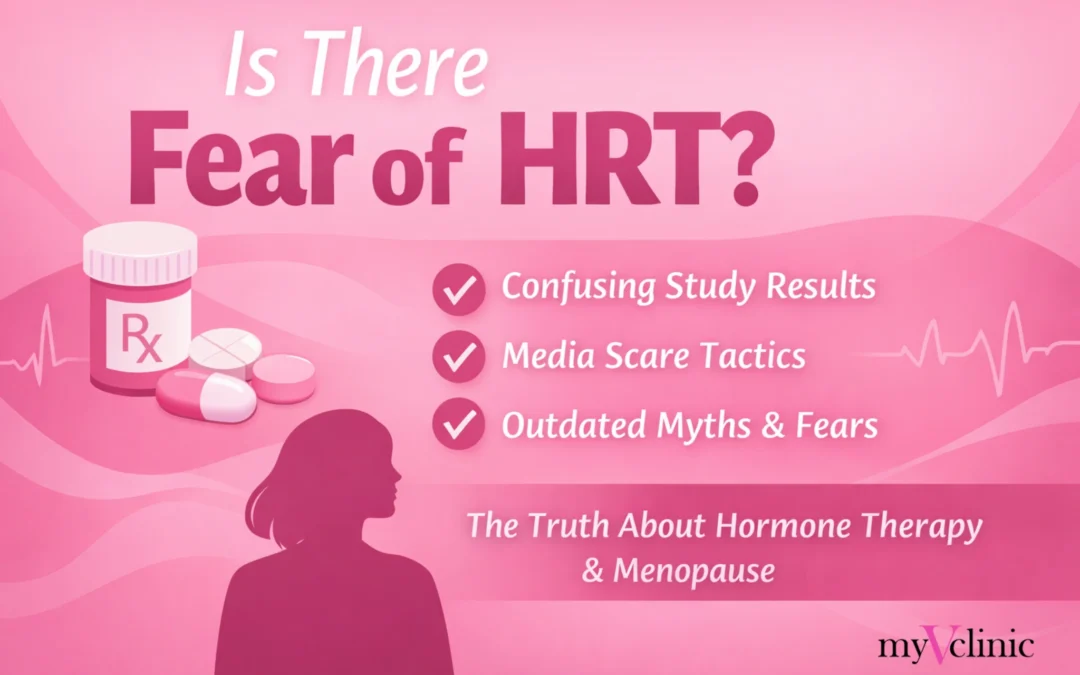
Is There Fear of HRT ? (Hormone Replacement Therapy)
And Where Did That Fear Come From HRT
Yes and it has shaped how menopause care is delivered for more than two decades.
Hormone replacement therapy (HRT), also called menopausal hormone therapy, is often approached with anxiety. Many women are told it is dangerous, outdated, or something to avoid entirely. This fear has become so common that it is rarely questioned.
But fear is not the same as evidence.
This article explains why fear around HRT exists, where it came from, and why modern hormone therapy deserves a more informed conversation.
Hormone Therapy Was Once Standard Menopause Care
For much of the twentieth century, hormone therapy was routine medical care.
By the 1960s, estrogen was widely prescribed to relieve menopausal symptoms and support long term health. When increased endometrial cancer risk was identified with estrogen alone, progesterone was added for women with a uterus, significantly reducing that risk.
For decades, hormone therapy was considered appropriate, effective, and mainstream.
The Women’s Health Initiative (WHI) and the Shift in HRT Perception
In the 1990s, the National Institutes of Health launched the Women’s Health Initiative to study chronic disease risk in postmenopausal women.
The hormone arm evaluated:
-
Oral conjugated equine estrogen
-
Oral synthetic progestin (medroxyprogesterone acetate)
-
One fixed dose
-
Primarily women over age sixty, many years past menopause
It did not study individualized care, different delivery routes, or early initiation near menopause.
How Fear of HRT Took Hold
In 2002, the combined hormone arm of the WHI was stopped early and announced publicly.
Media coverage emphasized risk without context. Headlines were simplified. Nuance was lost.
The result:
-
A dramatic drop in hormone prescriptions
-
Abrupt discontinuation for many women
-
Long term reluctance among clinicians
Fear became the dominant narrative.
What the WHI Data Actually Showed
What received far less attention:
-
The absolute increase in breast cancer risk was small
-
There was no increase in breast cancer mortality
-
Estrogen only therapy showed lower breast cancer risk and lower overall mortality
-
Hormone therapy reduced fractures, colon cancer, and diabetes risk
Later analyses demonstrated that age and timing matter, with younger women closer to menopause experiencing different and often lower risks.
Personalized hormone support, weight loss, and aesthetic care for people ready to feel like themselves again.
How Fear Became Embedded in Healthcare
After the WHI:
-
Hormone therapy was broadly labeled unsafe
-
Menopause education declined in training programs
-
Clinicians learned avoidance rather than individualized care
This created a lasting menopause care gap.
The Impact on Women’s Health
As hormone therapy use declined:
-
Menopausal symptoms were normalized as just aging
-
Bone loss and fracture risk increased
-
Quality of life declined
Hot flashes, insomnia, mood changes, cognitive complaints, joint pain, and sexual dysfunction were dismissed rather than treated.
What Modern Hormone Replacement Therapy Looks Like
Today’s hormone therapy is fundamentally different from what was studied in the WHI.
Modern care emphasizes:
-
Individualized treatment plans
-
Appropriate timing
-
Lower, adjustable dosing
-
Multiple delivery options
HRT is a medical tool, neither mandatory nor universally appropriate, but it is not inherently dangerous.
So Is There Fear of HRT?
Yes and it is rooted in outdated interpretations and incomplete messaging.
Fear has persisted longer than the science that created it.
At My V Clinic, the goal is not to push hormone therapy. It is to replace fear with understanding so women can make informed decisions based on current evidence, personal risk, and quality of life priorities.
Hormones were never the enemy.
Fear without context was.
Frequently Asked Questions About HRT (Hormone Replacement Therapy)
1. Why are so many women afraid of hormone replacement therapy?
Fear largely stems from early media coverage of the WHI study, which emphasized risk without explaining age, timing, or hormone type differences.
2. Does HRT cause breast cancer?
Combined estrogen progestin therapy showed a small increase in breast cancer incidence, but not mortality. Estrogen only therapy showed a lower breast cancer risk.
3. Is estrogen alone safer than combined hormone therapy?
For women without a uterus, estrogen alone has shown different and in some cases more favorable risk profiles compared to combined therapy.
4. Does the timing of starting HRT matter?
Yes. Starting hormone therapy closer to menopause is associated with different risks than starting many years later.
5. Is today’s HRT the same as what was studied in the WHI?
No. Modern hormone therapy uses different formulations, doses, and delivery methods and is individualized.
6. Can HRT improve quality of life?
For many women, hormone therapy significantly improves vasomotor symptoms, sleep, mood, sexual health, and overall function.
7. Does HRT increase heart disease risk?
Risk depends on age, timing, and individual factors. Younger women closer to menopause have different cardiovascular outcomes than older WHI participants.
8. Is HRT only for hot flashes?
No. Hormone therapy may also impact bone health, genitourinary symptoms, sleep, and metabolic health.
9. Why is menopause care not emphasized in medical training?
Menopause historically received limited curriculum time, and fear after the WHI further reduced clinician comfort with prescribing.
10. Is hormone therapy required during menopause?
No. HRT is optional and should be based on symptoms, goals, risks, and patient preference, not fear.
Sources
-
National Institutes of Health – Women’s Health Initiative
https://www.nhlbi.nih.gov/science/womens-health-initiative-whi -
JAMA – WHI Estrogen Alone Trial Follow Up
https://jamanetwork.com/journals/jama/fullarticle/1764058 -
North American Menopause Society Position Statements
https://www.menopause.org/publications/clinical-practice-materials/position-statements -
NIH Review on Timing Hypothesis and Hormone Therapy
https://www.ncbi.nlm.nih.gov/pmc/articles/PMC3466243/
hormone replacement therapy
HRT menopause
fear of hormone therapy
WHI study hormones
This content is for educational purposes only and does not constitute medical advice. It does not diagnose, treat, cure, or prevent any condition. Always consult a qualified healthcare professional regarding symptoms, medications, or treatment decisions.
Related Reading
- Menopause Care and Symptom Support
- Hormone Therapy Options and Safety Basics
- Sexual Wellness After 40
- GSM: Vaginal and Urinary Symptoms Explained
This content is for educational purposes only and does not constitute medical advice. It does not diagnose, treat, cure, or prevent any condition. Always consult a qualified healthcare professional regarding symptoms, medications, or treatment decisions.