

Female Testosterone Without the Hype
Female Testosterone
The Real Conversation Women Are Finally Having
You are tired.
Not just physically tired.
Mentally flat.
Less driven.
Less interested.
Less you.
You have been told it is stress.
You have been told it is aging.
You have been told it is normal.
Then someone says, “Maybe it’s your testosterone.”
And suddenly the internet splits in two.
One side says testosterone is the answer to everything.
The other side says it is dangerous for women.
Neither side is giving you the full story.
At My V Clinic, we do not practice hype medicine. We practice physiology.
Testosterone is not a miracle.
It is not poison.
It is a human hormone.
And when used correctly, it can be helpful.
But only in the right context.
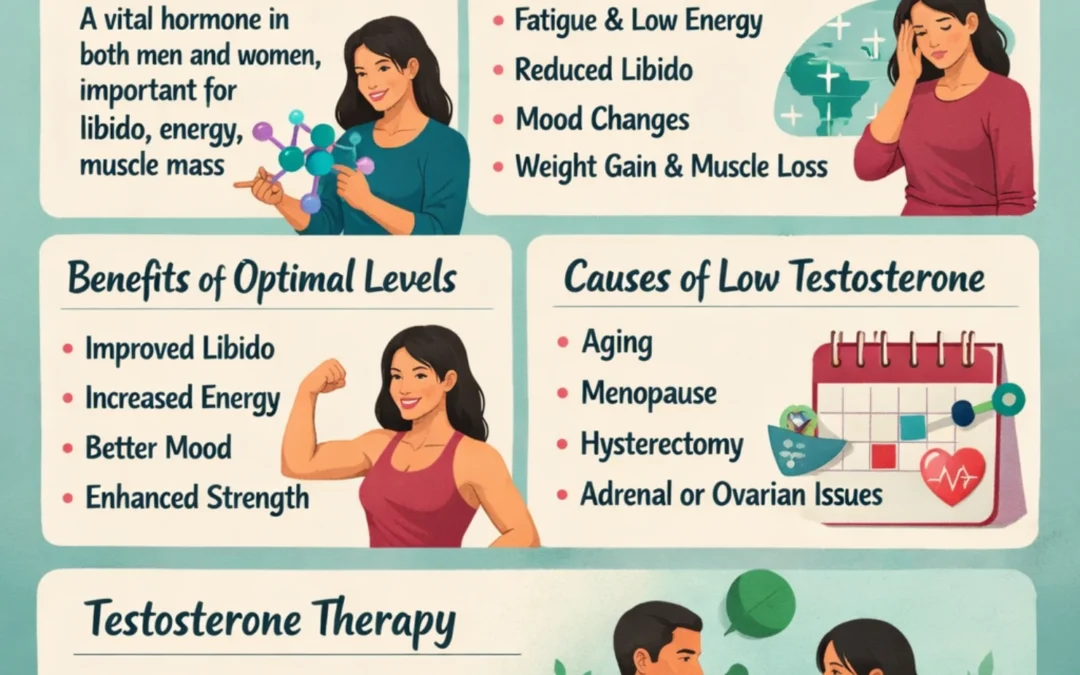
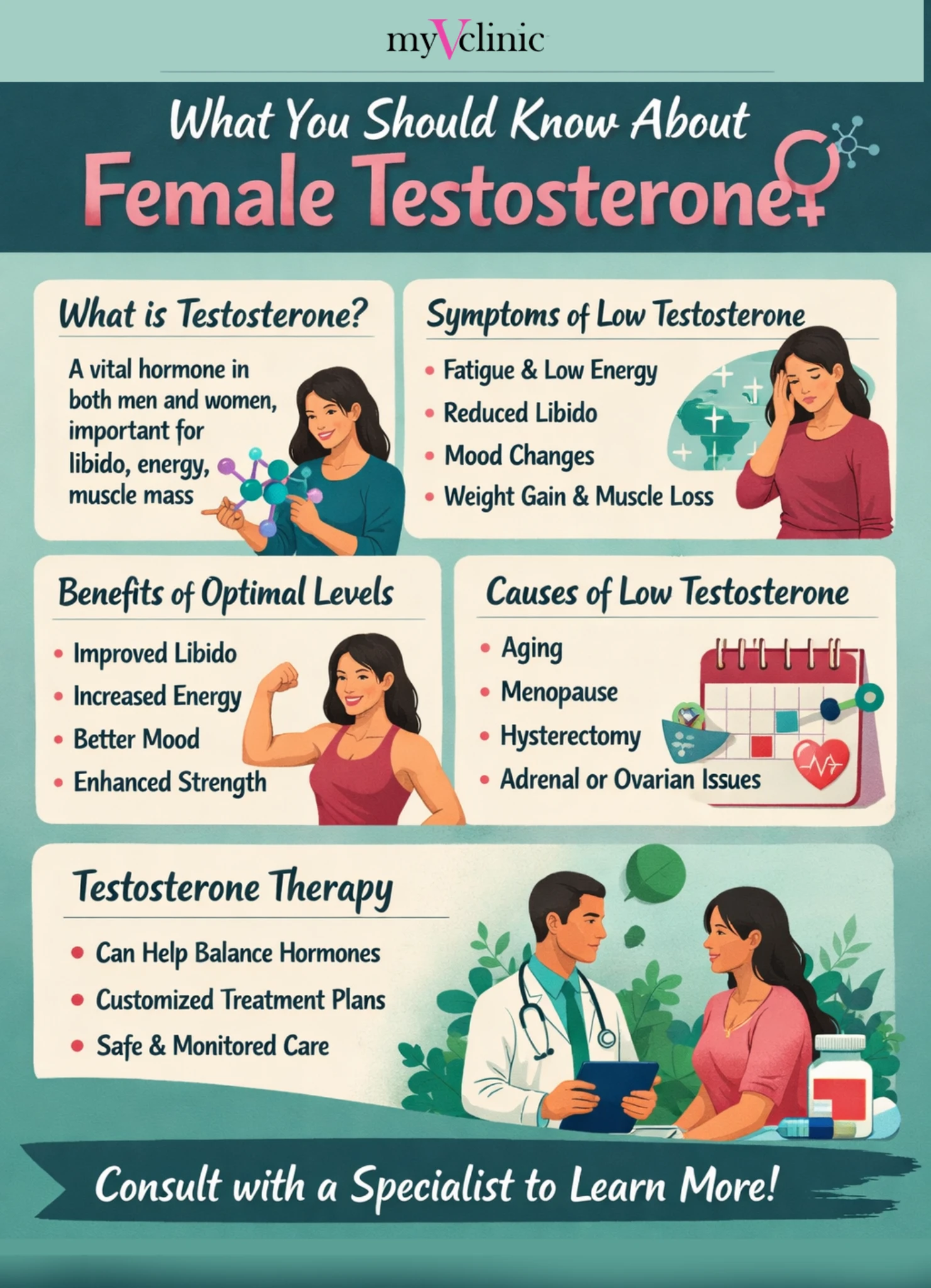
What You Should Know About Female Testosterone
Testosterone is one of the most misunderstood hormones in women’s health.
Some women are told they do not need it. Others are told it will fix everything. Some are warned it is dangerous. Others are sold it aggressively without proper explanation or monitoring.
The truth is more nuanced.
At My V Clinic, we believe women deserve clarity, not hype. Testosterone is not a miracle cure. It is not a villain. It is a human hormone. And like all hormones, it works best when used thoughtfully, precisely, and for the right reasons.
If you are in your late 30s, 40s, or 50s and wondering why your energy, drive, strength, or desire feel different, this conversation matters.
Let’s walk through what testosterone actually does in women, who may benefit, what the research shows, what it does not do, and how to approach it safely.
The Problem: Women Were Never Taught About Testosterone
Most women never learn that they produce testosterone.
You were taught about estrogen.
You were warned about menopause.
You were never taught that:
• Women make testosterone in the ovaries
• Women make testosterone in the adrenal glands
• Women continue making small amounts even after menopause
Levels decline gradually with age. They drop more abruptly after:
• Surgical menopause
• Ovarian removal
• Certain medications
• Chronic stress affecting adrenal function
Personalized hormone support, weight loss, and aesthetic care for people ready to feel like themselves again.
Yet there is no FDA approved testosterone product labeled specifically for women in the United States.
That does not mean it is illegal.
It does not mean it is unsafe.
It means the pharmaceutical pathway was never completed.
And that regulatory gap created confusion.
What Testosterone Actually Does in Women
Testosterone is often labeled “the male hormone.”
That is inaccurate.
It is a human hormone with receptors throughout the female body, including:
• Brain
• Bone
• Muscle
• Skin
• Vulva and clitoris
Physiologic female levels contribute to:
• Sexual desire and arousal
• Motivation and initiative
• Mood regulation
• Cognitive engagement
• Muscle protein synthesis
• Bone remodeling
This does not mean low testosterone is always the cause of symptoms.
It means it can be one contributing factor.
Hormones do not operate in isolation. Sleep, nutrition, stress load, resistance training, metabolic health, and relationship safety all matter.
Testosterone is part of a system.
The Deep Problem: Social Media Oversimplifies Hormone Science
You will see statements like:
“Every woman should be on testosterone.”
“Testosterone ruins women.”
“Testosterone prevents dementia.”
“Testosterone causes cancer.”
None of those statements reflect the full evidence.
Board certified urologist Dr. Kelly Casperson and OB GYN menopause specialist Dr. Lauren Streicher have both publicly emphasized nuance in their discussions about female testosterone. Their position aligns with current professional society guidance: physiologic dosing, appropriate screening, careful monitoring.
There is benefit for some women.
There is no indication for all women.
There are risks at high doses.
There is safety at appropriate doses.
Nuance is not viral. But it is responsible.
Where the Evidence Is Strongest
The strongest research support for female testosterone therapy is in:
Hypoactive Sexual Desire Disorder
Randomized controlled trials demonstrate improvement in sexual desire in postmenopausal women when:
• Low desire is distressing
• Other medical and relational causes are addressed
• Dosing remains physiologic
This is where the bulk of formal clinical data exists.
Where Evidence Is Emerging
Research is ongoing in areas including:
• Cognitive function
• Neuroprotection and tau protein interaction
• Mood regulation
• Bone density synergy with estrogen
There is mechanistic plausibility. There are smaller human studies. There is not yet 40 year longitudinal outcome data in women.
Transparency matters.
Women deserve to know what is established and what is still being studied.
What Female Testosterone Does NOT Do
Testosterone does not:
• Build muscle without resistance training
• Replace proper protein intake
• Reverse decades of metabolic damage
• Fix relationship dissatisfaction
• Act as a universal antidepressant
• Guarantee libido restoration
Muscle preservation requires:
• Progressive resistance training
• Adequate protein
• Recovery
• Metabolic support
Testosterone enhances response to training. It does not create adaptation alone.
Libido is multifactorial. It includes:
• Estrogen levels
• Stress
• Sleep
• Nervous system safety
• Pelvic floor health
• Emotional connection
No hormone acts in isolation.
Safety: What We Know
Short term data using physiologic female dosing shows:
• No consistent increase in cardiovascular events
• No clear increase in breast cancer risk
• No significant liver toxicity with transdermal use
Route matters.
Transdermal therapy avoids first pass liver metabolism. Oral testosterone carries different metabolic implications and is not standard practice for women.
Side effects are dose dependent and may include:
• Acne
• Facial hair growth
• Scalp hair thinning
• Voice deepening
• Clitoral enlargement
These are more common at supraphysiologic levels.
High dose pellet therapy, which can produce elevated and prolonged hormone levels, is controversial due to reduced dosing control and increased side effect risk.
Responsible therapy prioritizes titration and monitoring.
Lab Testing: Useful But Imperfect
Baseline labs help establish context.
Follow up labs help monitor response.
However:
• Serum testosterone does not always correlate with symptom improvement
• Free hormone levels depend on SHBG
• Oral estrogen increases SHBG
• Thyroid dysfunction alters binding dynamics
Labs guide decisions. They do not replace clinical evaluation.
Local Vaginal Testosterone
In some cases, local compounded testosterone may be used for:
• Vulvar tissue health
• Persistent genitourinary symptoms
This differs from systemic therapy and is sometimes explored in breast cancer survivorship populations under specialist care.
Again, nuance and supervision are essential.
Proper Execution: How We Approach It
At My V Clinic, the model is structured.
1. Define the Problem
What symptoms are present?
2. Rule Out Other Causes
We evaluate:
• Thyroid
• Iron
• Sleep
• Nutrition
• Stress
• Estrogen status
• Relationship health
3. Establish Clear Goals
What measurable improvement are we looking for?
4. Start Conservatively
Low dose. Reassess in 6 to 8 weeks.
5. Monitor and Adjust
If it helps, we optimize.
If it does not, we pivot.
You are not a protocol.
You are an individual.
Ongoing Research and Emerging Evidence
Areas being actively studied include:
• Testosterone and cognitive aging
• Interaction with neurodegenerative pathways
• Long term cardiovascular impact
• Synergy with estrogen in bone health
The science is evolving. Gen X women are demanding better data. That pressure is appropriate.
Frequently Asked Questions About Female Testosterone
• Is testosterone only for men?
Women naturally produce testosterone throughout life. It is a human hormone, not exclusively a male hormone.
• Is testosterone FDA approved for women?
There is no FDA labeled testosterone product specifically approved for women in the United States, though it may be prescribed off label based on clinical evidence.
• Does off label mean unsafe?
No. Many medications are prescribed off label when supported by research and clinical judgment. Off label does not mean illegal or dangerous.
• Will testosterone make me bulky?
Not at physiologic female dosing. Muscle development still requires resistance training and adequate nutrition. Testosterone does not create muscle without stimulus.
• Can testosterone deepen my voice?
At high or supraphysiologic doses, voice changes can occur. At appropriate dosing, this is uncommon but carefully monitored.
• Should I use my partner’s testosterone?
No. Male dosing is significantly higher and inappropriate for women. Self dosing can lead to unwanted side effects.
• What about pellet therapy?
High dose pellet therapy reduces dosing control and may increase the risk of side effects because levels cannot be adjusted once inserted.
• Do I need lab testing?
Baseline and follow up labs are recommended to guide treatment. However, lab values are interpreted alongside symptoms, not in isolation.
• Does testosterone prevent dementia?
Research is ongoing. There is emerging evidence about brain effects, but no definitive long term human trial proving prevention.
• Is testosterone safe long term?
Short term data using physiologic dosing is reassuring. Long term female specific outcome data continues to develop.
This content is for educational purposes only and does not constitute medical advice. It does not diagnose, treat, cure, or prevent any condition. Always consult a qualified healthcare professional regarding symptoms, medications, or treatment decisions.
Related Reading
This content is for educational purposes only and does not constitute medical advice. It does not diagnose, treat, cure, or prevent any condition. Always consult a qualified healthcare professional regarding symptoms, medications, or treatment decisions.